I still remember the moment I realized my DIY website was costing me business. It was a Tuesday afternoon, and I was on a call with a potential client who seemed genuinely interested in my services. We had a great conversation, exchanged ideas, and I was confident this was going to turn into a solid project. Then they asked for my website URL so they could “check out my work.” I sent it over, and twenty minutes later, I received a polite email saying they had decided to go in a different direction.
When I looked at my website that evening with fresh eyes, I saw what they saw. The images were slightly blurry, the text alignment was off on mobile, and the loading speed felt like dial-up internet from 1999. My homemade website, built over a weekend using a popular drag-and-drop builder, was actually working against me. It wasn’t showcasing my expertise—it was undermining it. That painful realization cost me a $5,000 project. Still, it taught me something invaluable: in business, perception is reality, and your website is often the first (and sometimes only) chance you get to make a professional impression.
This experience isn’t unique to me. I’ve talked to dozens of business owners who have similar stories. The truth is, we’re living in an era where your digital presence carries more weight than your physical location. Your website doesn’t just represent your business—it is your business for many potential customers who will never meet you in person before making a buying decision.
What Makes a Website “Professional” vs. DIY
When we talk about professional website design, we’re not just talking about pretty colors and fancy fonts. A truly professional website is the result of strategic thinking, technical expertise, and a deep understanding of user behavior. It’s the difference between a hand-tailored suit and something off the rack that almost fits.
Professional web design starts with discovery. Before a single pixel is placed, experienced designers ask questions about your business goals, target audience, competitive landscape, and brand personality. They research what your customers are actually searching for and how they make decisions. This strategic foundation determines everything that follows—from the site structure to the color palette to the placement of call-to-action buttons.
The technical execution matters enormously. Professional designers understand that a website needs to load in under three seconds because every additional second of loading time increases bounce rates by approximately 32%. They know that 53% of mobile users abandon sites that take longer than three seconds to load. They optimize images without losing quality, minify code, leverage browser caching, and implement content delivery networks. These technical details are invisible to visitors when done right, but glaringly obvious when ignored.
Then there’s the user experience design—the invisible architecture that guides visitors through your site. Professional designers create intuitive navigation systems that anticipate what users want to find. They establish visual hierarchies that draw attention to what matters most. They design for accessibility, ensuring that people with disabilities can use your site effectively. This isn’t just about being nice; it’s about reaching the widest possible audience and, in many jurisdictions, meeting legal requirements.
DIY website builders have improved dramatically over the years, and I don’t want to dismiss them entirely. For hobbyists, personal blogs, or businesses in the very earliest stages of validation, they serve a purpose. But they come with significant limitations. Templates force you into predetermined layouts that may not match your content needs. Customization options are often superficial—changing colors and fonts while the underlying structure remains generic. Most importantly, DIY builders don’t come with strategic guidance. You’re left guessing about what works, often based on personal preference rather than data-driven best practices.
Read Also: KohlsFeedback.com
The Real Cost of a Bad Website
Let me be direct about something that took me too long to learn: a bad website doesn’t just fail to help your business—it actively hurts it. In my early days, I thought having any website was better than no website. I was wrong.
Consider the psychology of online trust. Research from Stanford University found that 75% of users judge a company’s credibility solely on its website design. When your site looks outdated, loads slowly, or functions poorly on mobile devices, visitors don’t think “they probably used a cheap template.” They think “this business doesn’t care about quality” or “they might not be legitimate.” You never get a chance to explain that you’re just starting out or that you’re planning to upgrade soon. The judgment happens in milliseconds.
The financial impact extends beyond lost sales. A poorly designed website can increase your customer acquisition costs, requiring you to spend more on advertising to achieve the same results. It can damage your search engine rankings because Google considers user experience signals, such as bounce rate and time on site. It can create operational inefficiencies when customers can’t find basic information and flood your inbox with questions that should be answered on your FAQ page.
I’ve seen businesses spend thousands on Google Ads campaigns only to send that traffic to a homepage that confuses visitors. The click-through rates were high, but the conversion rates were abysmal. They were essentially paying to disappoint people. When we redesigned their site with clear messaging, intuitive navigation, and compelling calls to action, their conversion rate tripled without increasing their ad spend. The website wasn’t an expense—it was a leverage point for their entire marketing strategy.
Key Elements of Professional Web Design
After working in this industry for years and learning from both successes and failures, I’ve identified the non-negotiable elements that separate professional websites from amateur efforts. These aren’t trendy bells and whistles; they’re foundational components that directly impact your business results.
Visual Identity & Brand Consistency
Your website should feel like an extension of your brand, not a generic template with your logo pasted on top. This means consistent use of colors that align with your brand psychology, typography that reflects your personality (professional, playful, luxurious, approachable), and imagery that resonates with your target audience. Professional designers create style guides that ensure consistency across every page, building recognition and trust.
But visual identity goes deeper than aesthetics. It’s about creating the right emotional response. When a luxury jewelry brand’s website feels cheap, or when a fun children’s brand looks overly corporate, there’s a disconnect that creates cognitive dissonance for visitors. Professional designers understand color psychology—how blue conveys trust, how orange suggests energy, how green connects to nature and growth. They use these principles intentionally to support your brand message.
User Experience & Navigation
Have you ever been on a website where you couldn’t find the contact information? Or where the menu structure seemed to hide what you were looking for? These aren’t minor inconveniences—they’re conversion killers. Professional information architecture organizes content based on user needs and business goals, not internal company structure.
The best navigation feels invisible. Visitors find what they need without having to think about the interface. This requires careful planning of site hierarchy, clear labeling that uses familiar terminology, and strategic placement of important elements. Heat mapping studies consistently show that users follow predictable patterns when scanning websites, and professional designers use this knowledge to position key information where eyes naturally travel.
Mobile navigation deserves special attention. With over 60% of web traffic now coming from mobile devices, your mobile menu isn’t an afterthought—it’s the primary interface for most of your visitors. Professional designers create thumb-friendly navigation, ensure touch targets are large enough, and eliminate the need for pinch-zooming.
Mobile Responsiveness
I can’t overstate how critical this is. Google’s mobile-first indexing means they primarily use the mobile version of your site for ranking and indexing. If your mobile experience is poor, your search visibility suffers regardless of how beautiful your desktop site looks.
But mobile responsiveness isn’t just about shrinking content to fit smaller screens. It’s about rethinking the entire experience for mobile contexts. Mobile users have different needs and constraints—they might be on slower connections, using touch instead of mouse and keyboard, or looking for quick information while on the go. Professional designers create adaptive experiences that prioritize mobile-appropriate content, simplify forms, and optimize for speed.
Loading Speed & Performance
Website speed is a competitive advantage that many businesses ignore. Amazon famously calculated that a one-second delay in page load could cost it $1.6 billion in annual sales. While your business might be smaller, the principle scales down. Every second of delay reduces customer satisfaction, increases abandonment, and hurts your search rankings.
Professional optimization involves technical decisions that DIY builders often can’t accommodate. Image optimization using next-gen formats like WebP, lazy loading for below-the-fold content, minimizing render-blocking resources, and optimizing server response times. These technical improvements require expertise and access to server-level configurations that template-based solutions don’t provide.
How Professional Design Impacts Your Bottom Line
Let’s talk numbers, because ultimately, business decisions need to make financial sense. I’ve seen professional web design deliver returns that far exceed the initial investment, but the benefits often show up in ways that aren’t immediately obvious in your analytics dashboard.
First, there’s the impact on conversion rate. A well-designed website removes friction from the buyer’s journey. Clear messaging addresses objections before they form. Strategic placement of trust signals—testimonials, security badges, guarantees—reduces anxiety. Optimized forms reduce abandonment. These improvements compound. Increasing your conversion rate from 2% to 3% might sound small, but it represents a 50% increase in leads or sales without spending an additional dollar on advertising.
Then there’s the customer lifetime value effect. A professional website attracts better-fit customers who understand your value proposition clearly from the start. These customers tend to be more satisfied, require less support, and become repeat buyers or advocates. Conversely, a confusing website might attract customers who misunderstood what you offer, leading to refunds, negative reviews, and support headaches.
Search engine optimization benefits accumulate over time. Professional websites are built with clean, semantic code that search engines can easily crawl and understand. They have logical URL structures, optimized metadata, fast load times, and mobile-friendly designs—all ranking factors. While you can optimize a DIY site to some degree, you’re often fighting against the platform’s limitations. Professional sites have SEO built into their foundation.
Perhaps most valuable is the time and opportunity cost savings. When you hire professionals, you’re buying expertise and efficiency. What might take you weeks of frustration and research, a professional team can accomplish in days with better results. More importantly, you’re freeing yourself to focus on what you do best—running your business—rather than wrestling with technical problems outside your expertise.
What to Look for in a Web Design Agency
If you’re convinced that professional design is the right path, the next challenge is choosing the right partner. Not all web design agencies deliver equal value, and the wrong choice can be as costly as the DIY approach.
Start with their portfolio, but look deeper than surface aesthetics. Do their websites actually work well? Test a few on your phone. Click through the navigation. Fill out a contact form. The best portfolios showcase not just beautiful designs, but functional, user-friendly experiences. Look for variety—an agency that can only produce one style might force your unique business into an ill-fitting template.
Ask about their process. Professional agencies have established workflows that encompass discovery, strategy, design, development, testing, and launch. They should be able to explain how they handle revisions, ensure mobile responsiveness, and outline their testing procedures. Vague answers or promises of “we’ll figure it out as we go” are red flags.
Inquire about post-launch support. Websites aren’t “set and forget” projects. They need maintenance, security updates, and occasional adjustments. Some agencies disappear after launch, leaving you stranded when you need help. Others offer ongoing support packages or training so you can make minor updates yourself. Understand what happens after the site goes live.
Communication style matters enormously. You’ll be working closely with this team for weeks or months. Do they listen more than they talk in initial consultations? Do they ask insightful questions about your business? Do they explain technical concepts in terms you can understand? The best technical skills mean little if you can’t have productive conversations about your project.
Finally, consider cultural fit. Do they understand your industry? Have they worked with businesses similar to yours? While fresh perspectives are valuable, an agency that has never worked with e-commerce might struggle with your online store project, just as one focused on corporate clients might not capture the energy of your creative startup.
The designmode24.com Approach
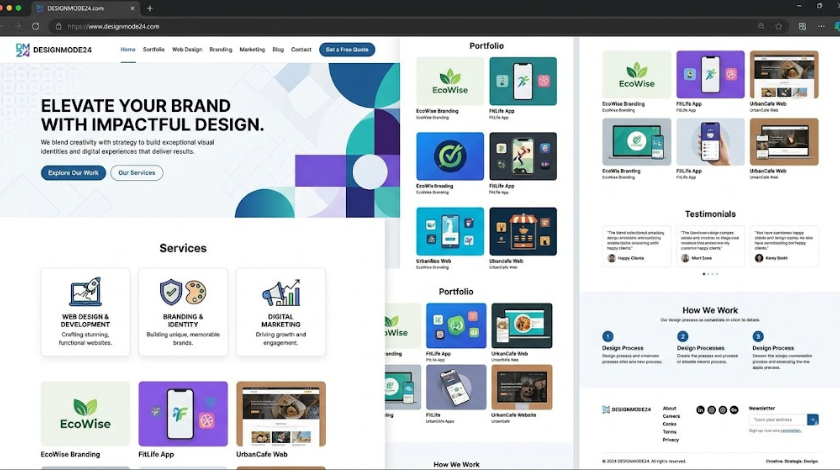
At designmode24.com, we’ve developed a methodology that addresses the common pitfalls I’ve described while delivering websites that genuinely serve business goals. Our approach isn’t about applying trendy effects or winning design awards—it’s about creating digital experiences that convert visitors into customers.
We begin every project with a comprehensive discovery phase that goes beyond filling out a brief questionnaire. We interview stakeholders, analyze competitors, research your target audience’s online behavior, and map the customer journey. This research informs every decision that follows, ensuring the final website isn’t just beautiful, but strategically sound.
Our design process emphasizes collaboration. We present concepts early and iterate on them based on your feedback, but we also provide guidance grounded in best practices and data. We don’t simply execute whatever you request—we act as consultants who help you understand the implications of different choices. This partnership approach results in websites that feel authentic to your brand while performing effectively.
Technically, we build with performance and scalability in mind—clean, semantic code. Optimized assets. SEO-friendly architecture. Mobile-first responsive design. Security hardening. These aren’t optional add-ons; they’re standard in every project. We also provide documentation and training so your team can manage content confidently, or we offer ongoing maintenance packages if you prefer to focus entirely on your business.
What sets our work apart is the attention to conversion optimization. We design with clear calls to action, strategic use of white space, compelling visual hierarchies, and trust-building elements. We test across devices and browsers. We optimize loading speeds obsessively. The result is websites that don’t just look professional—they perform professionally.
Conclusion: Website as Investment, Not Expense
The mindset shift that transformed my business was viewing my website as an investment rather than an expense. When you frame it this way, the question changes from “How little can I spend?” to “What return can I generate?” A professional website that costs $10,000 but generates $100,000 in additional revenue over two years is a spectacular investment. A $500 DIY site that generates nothing is expensive, period.
Your website is working for you 24 hours a day, seven days a week, never taking a vacation or calling in sick. It’s often the first point of contact between your business and potential customers. It influences perceptions, guides decisions, and either removes barriers or creates them. In this context, professional design isn’t a luxury—it’s a competitive necessity.
The businesses that thrive in the digital economy understand this. They invest in their online presence with the same seriousness they invest in their physical location, their inventory, or their team. They recognize that cutting corners on their website is cutting corners on their customers’ experience and, ultimately, on their own success.
If your current website isn’t representing your business at its best, if it’s not converting visitors at the rate you need, if it’s embarrassing you in client conversations, it’s time for a change. The cost of waiting—lost opportunities, damaged credibility, competitive disadvantage—far exceeds the investment in doing it right.
Frequently Asked Questions
How much should a professional website cost?
Pricing varies widely based on complexity, features, and the agency’s expertise. A basic professional website for a small service business might cost between $3,000 and $8,000. More complex sites with custom functionality, e-commerce capabilities, or extensive content can range from $10,000 to $50,000 or more. The key is understanding what’s included—strategy, copywriting, photography, SEO optimization, and ongoing support all affect value. Extremely low prices often indicate template-based work or offshore outsourcing that may lack quality or support.
How long does professional web design take?
A typical professional website project takes 6 to 12 weeks from kickoff to launch, depending on complexity. This includes discovery (1-2 weeks), design (2-4 weeks), development (2-4 weeks), and testing/revision (1-2 weeks). Rushing this process usually compromises quality. Be wary of agencies promising complete custom websites in days—that typically indicates heavy reliance on templates with minimal customization.
Will I be able to update my website myself?
Most professional websites are built on content management systems (CMS) like WordPress, Webflow, or custom solutions that allow non-technical users to update content, add blog posts, and make minor changes. A good agency provides training and documentation. However, significant design changes or functional additions usually require professional assistance. Discuss your comfort level with technology during the selection process to ensure you get an appropriate solution.
How do I know if my current website needs a redesign?
Key indicators include: declining or stagnant conversion rates, high bounce rates (especially on mobile), user complaints about finding information, outdated visual design compared to competitors, poor mobile experience, slow loading speeds, or difficulty updating content. If you’re embarrassed to give out your URL, that’s perhaps the clearest sign. A professional audit can provide an objective assessment of specific issues and opportunities for improvement.
What’s the difference between web design and web development?
Web design focuses on the visual and experiential aspects—layout, color, typography, user interface, and how users interact with the site. Web development involves the technical implementation—writing code, building databases, integrating systems, and ensuring functionality. Some professionals do both, but many agencies have specialists in each area. For complex projects, you need both skill sets. Clarify what specific services an agency provides when comparing quotes.
Is SEO included in web design?
Basic SEO should be included in any professional web design—this means clean code, fast loading, mobile optimization, proper heading structures, and metadata capabilities. However, ongoing SEO strategy, content creation, link building, and ranking optimization are usually separate services. Ask specifically what’s included and whether the site will be “SEO-ready” rather than “SEO-optimized.” The former provides a foundation; the latter implies active optimization work.