Quitting a job is often one of the most stressful experiences in a person’s professional life. Even if you absolutely love your new opportunity or if you are leaving a situation that was not quite right for you, the act of saying “I am leaving” can feel very heavy. I remember the first time I had to hand in my notice. My heart was racing, my palms were sweaty, and I felt like I was breaking up with a long-term partner. However, I quickly learned that a two-week notice letter is not just a formality. It is a tool that protects your reputation and ensures the bridges you built remain standing long after you move on to your next adventure.
A two-week notice letter is a formal document that tells your employer you are leaving your position and identifies your final day on the job. While it might seem like a simple piece of paper, it serves as an official record for the Human Resources department and your manager. It starts your transition period. It allows the company to begin searching for your replacement or redistributing your work. In this guide, I want to walk you through everything you need to know to write this letter so you can leave your current role with your head held high and your professional relationships intact.
Understanding the True Purpose of the Letter
Before you start typing, you need to understand why this letter exists. Some people think it is a place to vent their frustrations or list all the things they hate about the office. This is a big mistake. The primary purpose of this letter is to be professional and helpful. You are documenting a business decision. Even if your boss was difficult or the culture was not great, your resignation letter stays in your permanent employee file. Years from now, if a future employer calls for a reference or if you decide to return to that company in a higher role, that letter is what they will see. It is much better to be remembered as the person who remained professional until the very last second than as the person who left a trail of fire behind.
The best letters are brief and to the point. You do not need to write a novel about why you are leaving. Whether you are moving on for more money, a better title, or to take a break, you can keep the details minimal. The goal is to provide the facts of your departure while expressing gratitude for the opportunity you had. This approach demonstrates maturity and an understanding of the professional etiquette required in the modern workplace. It makes the transition easier for everyone involved, including yourself.
The Essential Components of a Great Letter
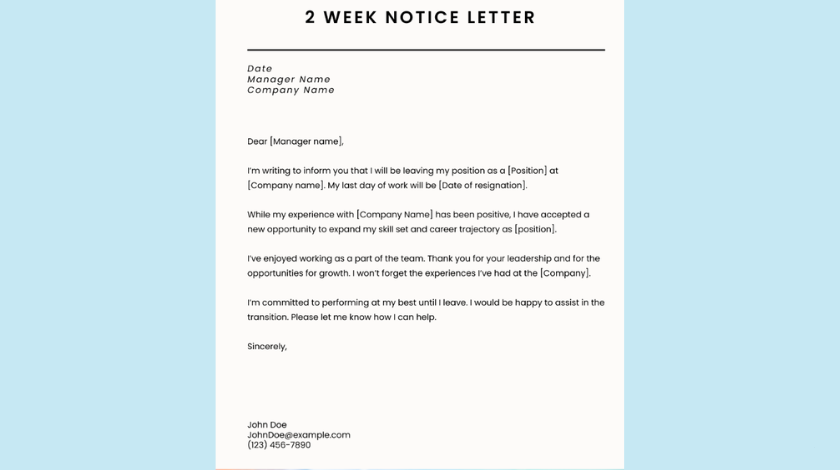
A solid two-week notice letter should follow a specific structure to ensure it covers all the necessary bases. First, you must include the letter’s date and your contact information. This sounds basic, but in a busy HR office, things can get lost, and having a clear date helps everyone keep track of the timeline. After the header, you should jump straight into the main point. You should state clearly that you are resigning from your position. For example, you might say, “Please accept this letter as formal notification that I am resigning from my position as Marketing Coordinator.” This leaves no room for confusion.
The most critical piece of information in the letter is your final day of work. You should calculate exactly two weeks from the day you hand in the letter and state that date clearly. If you are handing it in on a Monday, the 1st, your last day would typically be Friday the 12th or Monday the 15th, depending on your company’s policy. Being specific about the date prevents any misunderstandings about when you will stop showing up. It also helps your manager plan next week’s schedule. Without a clear date, the transition can become messy and stressful for the colleagues you are leaving behind.
After the logistics, it is always a good idea to include a sentence or two of gratitude. You do not have to be overly emotional, but mentioning that you appreciate the opportunities you had at the company goes a long way. You could mention a specific skill you learned or a project you enjoyed. Following this, you should offer to help with the transition. This is the part that really builds “EEAT” (Experience, Expertise, Authoritativeness, and Trustworthiness) in your professional life. By offering to train a replacement or document your current processes, you show that you care about the team’s success even after you are gone. This is how you leave a lasting positive impression.
To Email or to Print: That is the Question
In our digital world, many people wonder whether they should send their notice by email or print a physical letter. The answer usually depends on your workplace culture, but a combination of both is often the best path. Ideally, you should have a face-to-face meeting with your manager first. Walking into their office and saying “Do you have a minute?” is the most respectful way to break the news. Once the conversation is over, you can hand them a printed copy of your letter, then follow up with an email version for their records and HR.
If you work in a remote environment, an email is perfectly acceptable and usually the only option. In this case, your email should be just as formal as a printed letter. Use a clear subject line like “Resignation – [Your Name]” so it does not get buried in their inbox. Even in an email, maintain the same professional structure we discussed. Avoid using emojis or overly casual language. I have seen people try to be “cool” or funny in their resignation emails, and it almost always backfires. It is a formal business document, so treat it with the respect it deserves.
Handling the Final Two Weeks
Once the letter is submitted, the real work begins. The notice period can be awkward. Some managers might suddenly treat you like a stranger, while others might try to pile on extra work before you leave. It is important to stay focused during these last ten business days. This is your chance to solidify your legacy at the company. I always suggest creating a “handover document” for your team. This document should list all your current projects, where the files are located, the key contacts, and any upcoming deadlines.
When you provide a detailed handover, you are giving your coworkers a gift. You are making sure they aren’t left scrambling once you walk out the door. It also prevents you from getting frantic phone calls three weeks into your new job. People will remember how helpful you were during your final days. If you slack off or “check out” early, that is the version of you that will stick in their minds. Stay productive, be kind to your coworkers, and keep your head in the game until the very last hour of your last day.
Navigating Difficult Conversations and Counter-Offers
Sometimes, when you hand in your notice, your boss might try to convince you to stay. They might offer you a raise or a promotion on the spot. This is known as a counteroffer. While it might feel flattering, you need to be very careful. Usually, the reasons you wanted to leave in the first place are still there. If you only stay because of the money, you might find yourself unhappy again in a few months. Research shows that a high percentage of people who accept counter-offers end up leaving within a year anyway.
If you receive a counteroffer, thank them for the gesture, but stand firm if you are sure about your decision. You can say something like, “I really appreciate the offer and the confidence you have in me, but I have made my decision, and I am excited about this new chapter.” Being firm yet polite prevents the situation from becoming an ongoing negotiation. You have already done the hard work of writing the letter and finding a new path, so trust your gut and move forward.
Writing for Different Scenarios
Not every resignation is the same. Sometimes you are leaving a job you love for a dream opportunity, and other times you are leaving an incredibly stressful job. If you are leaving for a career change, you can mention that you are pivoting. This is a very neutral and professional way to explain your departure. If you are leaving on short notice due to a family emergency or an unexpected life event, you should still be as professional as possible. Even if you cannot give the full two weeks, provide as much notice as you can and express your sincere apologies for the short timeframe.
In toxic work environments, it is very tempting to use the letter as a way to “get even.” Please resist this urge. A resignation letter is not a grievance report. If you want to provide feedback about the company culture, save it for the exit interview with HR, and even then, keep it constructive. Your letter should remain a simple statement of your departure. By staying professional in a difficult situation, you demonstrate a higher level of emotional intelligence than the environment you are leaving.
Conclusion: Leaving with Grace
Writing a two-week notice letter is the final act of your current job. It is the closing chapter of a story you have been writing every day you showed up for work. By taking the time to write a clear, professional, and grateful letter, you ensure your story ends on a high note. You are protecting your future self and showing respect for the people you work with. Remember to keep it simple, stick to the facts, and offer your help during the transition.
Leaving a job is a major life transition, but it doesn’t have to be a negative one. Whether you are moving toward a bigger paycheck, a better work-life balance, or a completely new field, your resignation letter is the bridge that carries you there. Treat it with care, deliver it with confidence, and look forward to the new opportunities that await you. You have worked hard to get to this point, and you deserve to start your next chapter with a clean slate and a strong professional reputation.
Frequently Asked Questions
1. Is a two-week notice letter legally required?
In most “at-will” employment states in the U.S., it is not a legal requirement unless you have a specific employment contract that says otherwise. However, it is a standard professional expectation. Failing to give notice can result in being marked as “ineligible for rehire” and damage your reputation in your industry.
2. What if I want to leave in less than two weeks?
If you must leave sooner, talk to your manager as soon as possible. Be honest about why you need to leave early. While they may not be happy, being upfront is better than not showing up at all. Try to offer as much help as you can in the limited time you have left.
3. Do I have to tell my boss where I am going next?
No, you are not obligated to share where your new job is. If you want to keep it private, you can say you are “pursuing a new opportunity” or “taking some time for a career transition.” Most people will understand and respect your privacy.
4. Should I mention my salary increase in the letter?
No, you should never mention money in a resignation letter. The letter is about the end of your tenure at the company, not a comparison of your old and new salaries. Keep the focus on your transition and your gratitude for the experience.
5. Can an employer fire you immediately after you give notice?
Yes, they can. In some industries, especially those involving sensitive data or intense competition, companies have a policy of letting people go immediately upon resignation. Be prepared for this possibility by packing your personal items and organizing your digital files before you have the conversation.